Wednesday, May 28, 2014

Harry Shipman


             Harry Shipman is a contemporary astronomer who is currently still teaching the science at a university level as a professor. Outside of his passions for teaching both astronomy and physics, Shipman is not very well known. He has published an array of books and articles with the aid of other astronomers and researchers during his career thus far. Before residing at the University of Delaware as a professor of astronomy, Shipman attended both Harvard and Caltech, two extremely prestigious schools, where he obtained his degree and became very adept in his field. As an astronomer, Shipman paid little attention to the viewpoints of others when it came to groundbreaking and controversial issues for his time. When he wrote the majority of his papers and his best selling novel, the ideas regarding Black Holes, Quasars and multiple universes were all very taboo in the world of astronomy. Shipman's work played a vital role in the adoption of new and ever changing values in the scientific world with respect to these ideologies. Today he continues to teach at the University of Denver.

"Harry Shipman's Home Page." Welcome to the University of Delaware. N.p., n.d. Web. 28 May 2014.

"Harry L. Shipman." Faculty Board Biographies. N.p., n.d. Web. 28 May 2014.

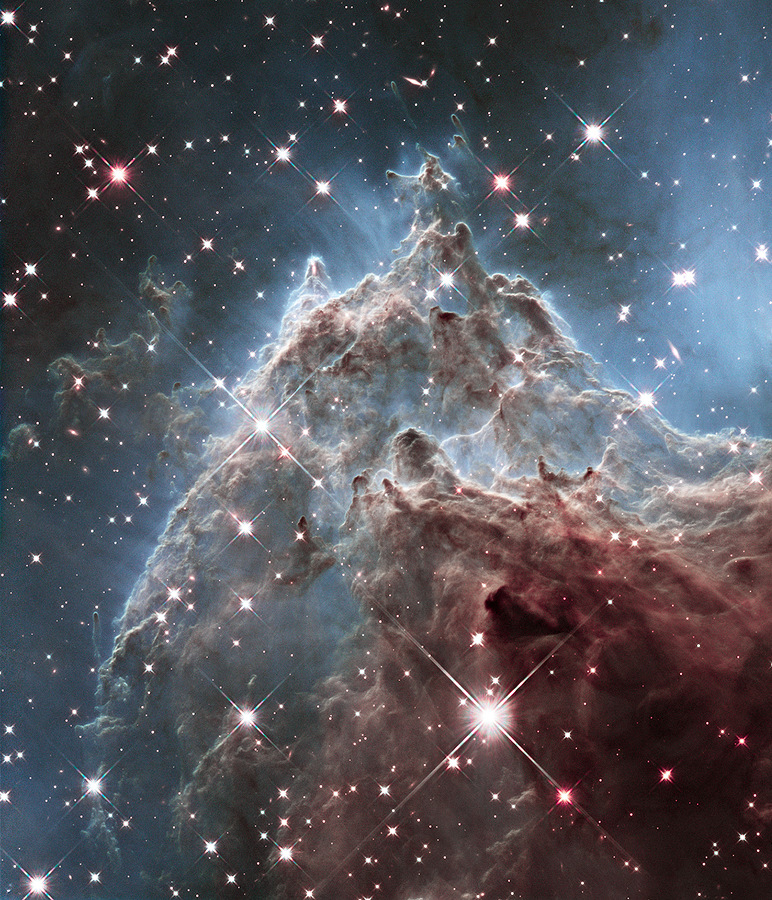
Massive Star Forming Region

See Explanation.  Clicking on the picture will download
 the highest resolution version available.

This is a massive star forming region located roughly 6,400 light years away and near the extremely dense region surrounding the constellation Orion. Star forming regions develop in areas where there is a great amount of material, heat, and matter being pushed together by gravitational forces. The entire region spans about 6 light years of space. These images were originally found by the Hubble Telescope.  

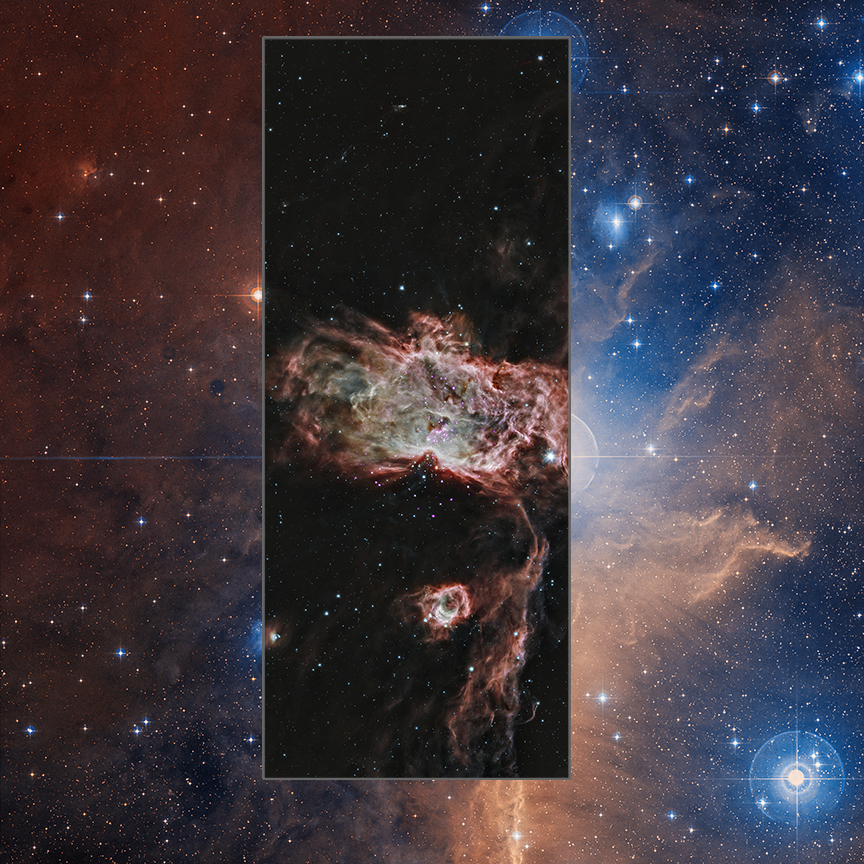
Flame Nebula

See Explanation.
Moving the cursor over the image will bring up an alternate version.
Clicking on the image will bring up the highest resolution version
available.
The Flame Nebula, located a close 1,400 light years away, although riddled with dust and debris, we are still able to peak inside the nebula near Orion's Belt and see new stars forming. Through the use of the Spitzer Space Telescope, we are able to glean so much more valuable knowledge regarding how stars form and the lives of stars themselves. 


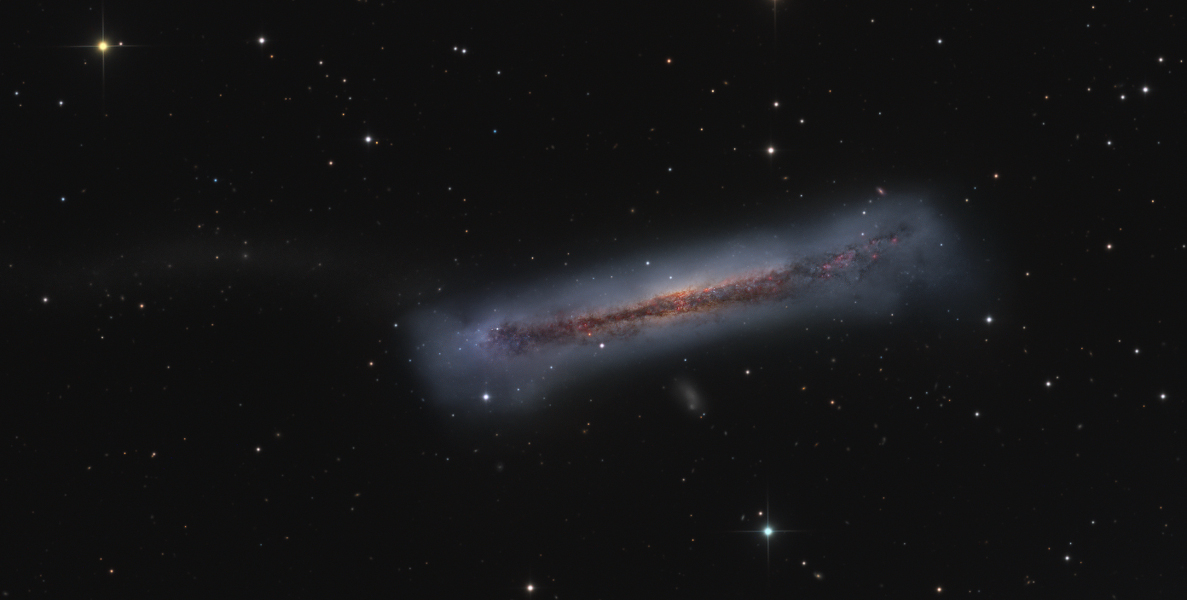
The Hamburger Galaxy

See Explanation.  Clicking on the picture will download
 the highest resolution version available.

These telescopic views give us a view of a far away puffy galaxy surrounded by a disk of dust. Commonly known as the Hamburger Galaxy for its enveloped appearance, this small, spiral galaxy serves as a brilliant example of a "faint but extensive tidal tail". Spanning 100,000 light years across and neighboring two M objects to form the Leo Triplet, the Hamburger Galaxy serves not only as a great example of tidal tail as a result of the gravitational pull between neighboring universes but also as one of out many identifiers in our night sky.